Ribadu:The President Praised Him In Adamawa As Best NSA Ever, But Americans Are Laughing—Williams
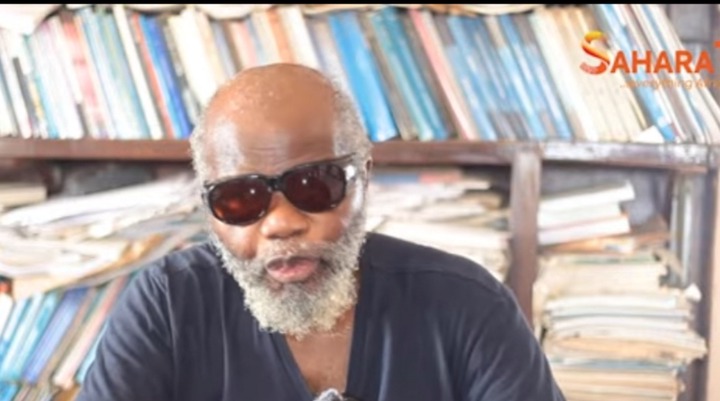
According to a report by Sahara TV, on Saturday, March 14, 2026, General Ishola Williams, a retired high-ranking officer who formerly served as the Nigerian Army’s Chief of Defence Training and Planning, voiced profound apprehensions regarding the prevailing methodology used to manage Nigeria’s security crises.
He contended that the various crises currently plaguing the federation are not spontaneous occurrences but are instead the culmination of deep-seated issues that have been allowed to fester over several decades.
From his perspective, the unending cycle of violence and instability serves as a clear indication that there has been no substantive evolution in tactical approach, even as various political regimes have come and gone with repeated vows to rectify the situation.
The retired officer elaborated on the premise that effective leadership is the most vital component in solving national dilemmas, particularly those involving the protection of lives and property.
By drawing parallels with certain decisive actions taken at the state level, he argued that robust political determination can yield tangible results when those in power set unambiguous standards and demand strict adherence to them.
He pointed to historical instances where unwavering executive resolve supposedly compelled defiant groups to fall in line, thereby illustrating his belief that the combination of strong personal leadership and functional state institutions is a formidable force for order.
Nevertheless, he voiced a sense of profound letdown regarding the perceived lack of such steadfastness at the federal tier of government.
He asserted that the various arms of the security apparatus frequently find themselves in a defensive posture, acting only after tragedies have unfolded rather than preventing them through foresight.
This recurring theme of reactive engagement, he noted, brings to the forefront troubling questions regarding the level of synergy, the enforcement of consequences for failure, and the overall quality of information exchange between the different organisations tasked with safeguarding the republic.
The discourse also touched upon the concept of command responsibility within the armed forces, specifically in the wake of operations that result in significant loss of life.
He observed that in many international jurisdictions, it is customary for high-ranking officials to resign or be relieved of their duties following major operational disasters as a demonstration of professional integrity and accountability.
He lamented that such a culture of taking responsibility appears to be absent locally, even when the human cost of failure is staggering and the trust of the citizenry has been severely compromised.
Furthermore, the retired officer cast doubt on the current state of operational preparedness within the country’s defence establishments.
He argued that the frequency with which military installations are breached suggests fundamental flaws in both the gathering of intelligence and the mechanisms designed to thwart enemy espionage.
Despite the existence of numerous agencies dedicated to monitoring threats, the ability of insurgents to execute sophisticated, large-scale strikes implies a breakdown in communication or, more worryingly, the possibility of internal information leaks.
He also emphasised the connection between the credibility of leaders and the level of trust the public places in them.
He suggested that official remarks regarding key security appointments often elicit scepticism both at home and on the global stage.
The reputation of leadership is indispensable for sustaining the morale of the troops on the front lines and ensuring the general population feels secure.
He said, “The NSA is down there. The president went to Adamawa and said it’s the best NSA Nigeria has ever had. The Americans are laughing. The people who know him are laughing.”
Beyond his critique of individual leaders, he called for a fundamental overhaul of the nation’s security framework.
He urged the government to reassess the current organisational structure to eliminate redundant roles and ensure that every institution has a clearly defined mandate.
He concluded that the path to lasting peace necessitates a commitment to long-term strategic thinking, enhanced training protocols, and more robust intelligence partnerships with regional allies.
Only through these systemic changes and a genuine dedication to reform can the government hope to diminish the threat of insecurity and restore the integrity of the nation’s institutions.National News…